Description
Targeted Fat Loss and Regenerative Potential
Why Choose HGH Fragment 176-191?
- Effective Fat Burning: Stimulates lipolysis with high selectivity, resulting in significant adipose reduction.
- Blood Sugar Regulation: Helps lower glucose levels, supporting better glycemic control in metabolic studies.
- Cartilage Healing: Promotes cartilage regeneration, ideal for joint and soft-tissue research.
- No Unwanted Growth: Does not stimulate long bone growth or general tissue proliferation, unlike full-length hGH.
- Stable IGF-1 Levels: Maintains IGF-1 without systemic elevation, reducing side-effect risk.
- Insulin Sensitivity: Preserves insulin function, minimizing potential for insulin resistance.
Benefits of HGH Fragment 176-191 in Scientific Research
HGH Fragment 176-191 is widely used in studies related to fat metabolism, insulin signaling, and cartilage repair. Its precision-targeted mechanism and safety profile make it a top-tier peptide for laboratory testing.
How It Works
This fragment isolates the region of the hGH molecule responsible for lipolytic action. It activates beta-3 adrenergic receptors, increasing fat breakdown and thermogenesis. In preclinical models, HGH Fragment 176-191 has demonstrated targeted fat loss effects in obese subjects without impacting lean body mass.
Safety Profile
Multiple studies confirm that HGH Fragment 176-191 does not cause side effects associated with full hGH administration. No adverse changes in glucose levels, IGF-1 concentrations, blood pressure, or edema have been observed. A meta-analysis of six trials shows high tolerability and minimal metabolic disruption.
Ideal Applications
- Obesity and fat metabolism research
- Insulin sensitivity and glycemic control studies
- Joint repair and cartilage regeneration models
- Non-anabolic metabolic therapies
Product Specifications
- Sequence: Tyr-Leu-Arg-Ile-Val-Gln-Cys-Arg-Ser-Val-Glu-Gly-Ser-Cys-Gly-Phe
- Molecular Formula: C78H125N23O23S2
- Molecular Weight: 1817.12 g/mol
- CAS Number: 66004-57-7
Key Scientific References
- Ng & Bornstein, *Am. J. Physiol.*, 1978 – Discovery of lipolytic activity in GH fragments.
- Heffernan et al., *Endocrinology*, 2001 – Effects on lipid metabolism in obese mice models.
- Ferrer-Lorente et al., *Life Sci.*, 2005 – Study on beta3-adrenergic agonists and lipid stores.
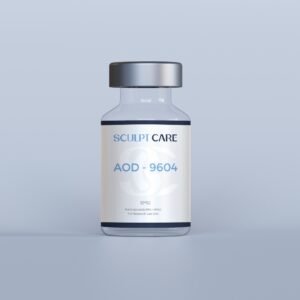
- Ng et al., *Horm. Res.*, 2000 – Metabolic studies of AOD9604.
- Stier et al., *J. Endocrinol. Metab.*, 2013 – Human trials on safety and tolerability.
- Heffernan et al., *Int. J. Obes.*, 2001 – Comparison of full hGH vs. fragment in fat oxidation.
- Kwon & Park, *Ann. Clin. Lab. Sci.*, 2015 – Cartilage recovery with AOD9604 injections.
Usage Disclaimer
For Research Use Only: This compound is strictly intended for in vitro laboratory research. Not for human or veterinary use. Not a drug, food, or cosmetic. This product has not been evaluated or approved by the FDA. It must be handled by qualified, licensed professionals in certified research environments.
Conclusion
HGH Fragment 176-191 is a next-generation peptide designed for focused fat metabolism and regenerative applications without the systemic side effects of full hGH. For researchers seeking a reliable tool in the study of obesity, metabolic disorders, or tissue repair, this fragment offers a precise, safe, and research-backed solution.



Reviews
There are no reviews yet.